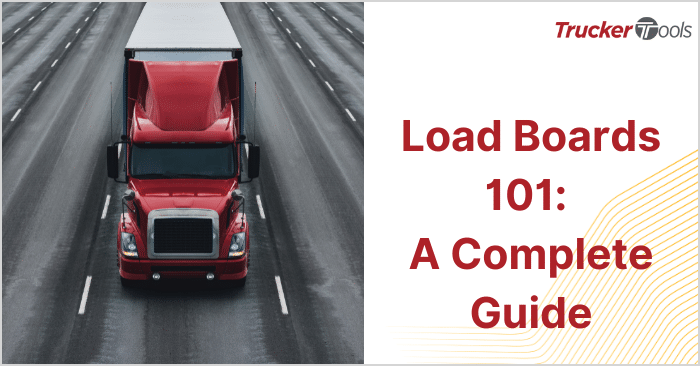
Load boards are the backbone of how carriers find freight and how brokers cover loads. But not all load boards work the same way — and using the wrong one for the situation can cost you time, miles, and money.
In this guide, you’ll learn how load boards work, the different types available to carriers and owner-operators, and how to choose the right one based on how you run your business.
What Is a Load Board and How Does It Work?
A load board is an online marketplace where freight brokers post uncovered loads and carriers search for freight that fits their truck and lane. Load boards digitize what used to happen over the phone — reducing back-and-forth, giving carriers 24/7 access to freight, and helping brokers cover loads faster.

Carriers and owner-operators use load boards to find loads, post their available trucks, and connect with brokers. Brokers use them to cover open freight quickly and build relationships with reliable carriers. Some load boards require a subscription fee; others are free to use.
Load Board Advantages and Disadvantages
Load boards have become a staple in trucking — and the best ones do a lot more than just connect trucks to freight.
Advantages
- Find loads for your truck quickly, without making phone calls
- Post your truck and let brokers come to you
- Search by lane, equipment type, location, and date
- Accessible 24/7 from a browser or mobile app
- Digitizes rate negotiations so you’re not haggling on the phone
- Connect with new brokers and build your book of business
- May include tools for factoring, route planning, and more
Disadvantages
Not all load boards are built the same. The most common frustrations carriers run into:
- Some load boards aren’t real-time, meaning you may pursue loads that are already taken
- Some lack fraud prevention, leaving room for phantom postings and bad actors
- On some boards, posted rates don’t reflect what brokers actually pay
The type of load board you use determines whether these disadvantages apply to you — which is why choosing the right one matters.
Are Load Boards Worth Using?
Yes. Load boards are the primary way carriers and owner-operators find spot freight, fill backhauls, and break into new lanes. Even contracted carriers use load boards when they need a reload or want to expand into new markets.
For brokers, load boards are the go-to for spot market freight and finding new carrier relationships that can become long-term partnerships.
When Should Carriers Use a Load Board?
Load boards should be part of your long-term strategy if you don’t have established contracts with brokers or shippers. They’re also valuable for contracted carriers who need backhauls, want to test new lanes, or are looking to grow.
The more important question isn’t whether to use a load board — it’s which one fits how you work.r business.
Two Types of Load Boards — and How to Choose
There are two fundamentally different types of load boards in use today, and they serve different needs.
The Open Marketplace: Best for Finding the Right Load at the Right Price
A traditional open marketplace load board gives you access to the broadest pool of available freight. You search, compare, negotiate, and book. The advantage is volume and choice. The disadvantage, on some platforms, is that postings can be outdated and rates aren’t always transparent.
DAT One is the industry’s leading open marketplace load board, built to solve exactly those problems. With 2.5x more loads than anyone else and rate data based on $1 trillion in verified freight transactions, DAT gives carriers the volume and market intelligence to find the right load at the right price — no matter where you are.
Key advantages for carriers:
- More loads within a 50-mile radius than any other load board
- Rate data based on verified deals, not posted rates, so you negotiate from a position of knowledge
- Broker credit scores and payment history on every company in the DAT directory
- Post your truck and reach the largest broker network in the industry
- TriHaul routing tool to find higher-paying triangular routes and cut deadhead miles
DAT One is the right tool when you’re prospecting — building new lanes, vetting new brokers, and making sure you’re never leaving money on the table.
Find your DAT One carrier plan
The Streamlined Booking Platform: Best for Speed and Efficiency on Your Preferred Lanes
A streamlined booking platform takes a different approach. Instead of searching a broad marketplace, you get matched to loads on your preferred lanes, book instantly, and move through the haul with less friction from start to finish.
The Convoy Platform is built for FTL dry van, reefer, and flatbed carriers who know their lanes and want to spend less time searching and more time hauling. It’s free to use with no subscription fees. Get automatic alerts when loads hit your preferred lanes, book loads instantly 24/7, and streamline every step of the haul with GPS tracking, easy BOL submissions, and detention requests handled in the app. Every load comes with Two-Day QuickPay, so you’re not waiting on a check while your next load is waiting on you.
The Convoy Platform is the right tool when efficiency is the priority — fewer steps between finding a load and getting paid.
Sign up for the free Convoy Platform
Traditional vs. Smart Load Boards: What’s the Difference?
Within these two types, there’s also an important technical distinction worth knowing.
A traditional load board requires carriers and brokers to manually post and remove their trucks and freight. When a load is taken, it may stay visible on the board until someone removes it — which is where outdated postings come from.
A smart load board integrates directly with broker TMS platforms so that when a load is booked, it’s automatically removed from the marketplace. Smart load boards also use digital freight matching to connect open loads with available trucks based on preferences and history. They’re faster, more accurate, and more efficient than traditional boards.
Both DAT One and the Convoy Platform operate as smart load boards — which means the disadvantages of traditional load boards don’t apply.
Which Load Board Is Right for You?
The short answer: they’re not either/or.
Use DAT One when you want maximum load selection, rate intelligence, and negotiating power across any lane or equipment type.
Use the Convoy Platform when you want a faster, more streamlined path from booking to payment on the dry van, reefer, or flatbed lanes you already run.
Together, they cover the full picture of what it takes to keep your truck loaded and your business profitable.